



In May, we reported on the introduction of partial incapacity for work, which the Federal Government had planned as one element of its healthcare reform. The healthcare reform has now been adopted and the statute promulgated. As a result, it will be possible to certify partial incapacity for work from January 1, 2028. In substance, the legislature has again modified the rules on partial incapacity for work.
The healthcare reform has been adopted and promulgated
Despite heated debates and broad opposition, the Bundestag and, subsequently, the Bundesrat approved the legislative proposal on July 10, 2026. In doing so, they also approved the introduction of partial incapacity for work. Going forward, it will be codified in Section 44c of the Social Code Book V („Sozialgesetzbuch Fünftes Buch“) and supplemented, among other things, by the rules on partial sickness benefit. The legislative package was published in the Federal Law Gazette on July 24, 2026.
What changed during the legislative process?
The legislature amended the original draft legislation. In addition to purely structural changes and a specification of the electronic employer notification procedure, the following amendments are particularly notable:
The employer must actively consent to the partial performance of work. If, following notice by the employee, the employer does not respond or fails to respond within seven calendar days, the medical certification is deemed to be a certification of full incapacity for work. The original proposal provided that the position would be deemed suitable and consent deemed granted if the employer did not respond within the seven-day period. This legal fiction has been removed in favor of employers.
The statute provides for a “fallback option” also where partial incapacity for work is discontinued. Accordingly, both the employee and the employer may terminate partial incapacity for work prematurely in text form. Thereafter, the certification of partial incapacity for work is deemed to be a certification of full incapacity for work.
The remuneration consequences are now expressly regulated by statute. However, there is no change to the employer’s payment obligations.
The new provision in Section 44c of the Social Code Book V will now enter into force only on January 1, 2028, rather than on January 1, 2027 as originally planned.
The new rules are to be evaluated at a later stage. This evaluation is also intended to consider the effectiveness of partial incapacity for work compared with gradual return to work and Occupational Integration Management („Betriebliches Eingliederungsmanagement (BEM)“).
Despite the amendments, the basic concept remains essentially unchanged
Despite the changes outlined above, the basic structure remains unaffected. In summary, the following requirements apply to the partial performance of work in the event of partial incapacity for work:
The employee is covered by statutory health insurance and is expected to be incapacitated for work due to illness for more than four weeks.
The employee agrees to the partial performance of work.
A physician certifies partial incapacity for work amounting to 25%, 50%, or 75% of the regular weekly working time.
The employee notifies the employer of their willingness to partially perform work, stating the certified extent and the certified period.
The employer consents to the partial performance of work. The employer must issue consent within seven calendar days of the employee’s notification. It remains the case that the employee has no entitlement to the creation or modification of a suitable position.
If the employer consents, the employer must notify the employee of the date on which work is to commence in text form.
Guideline of the Federal Joint Committee still outstanding
With the enactment of the statute, the introduction of partial incapacity for work has been decided at the political level. However, the more detailed design of partial incapacity for work remains subject to the guideline to be issued by the Federal Joint Committee. In particular, the guideline is intended to specify the circumstances under which physicians may certify partial incapacity for work of 25%, 50%, or 75%.
Need for action for employers
From an employer’s perspective, partial incapacity for work has been softened in several respects during the legislative process. In particular, there is no legal fiction of consent in the event of no response or a delayed response. The employer may also terminate the model prematurely if it subsequently proves not to be suitable.
Nevertheless, employers should address partial incapacity for work before January 1, 2028. In particular, it is advisable to review processes and the handling of this newly created option in advance: What criteria should govern the decision whether to consent to partial incapacity for work? Who is responsible for granting consent? How can partial performance of work be implemented from an organizational perspective? Once these and other questions have been clarified, employers can approach the new rules with confidence and make the best possible use of the model.
Do you have further questions on this topic?
Also interesting:
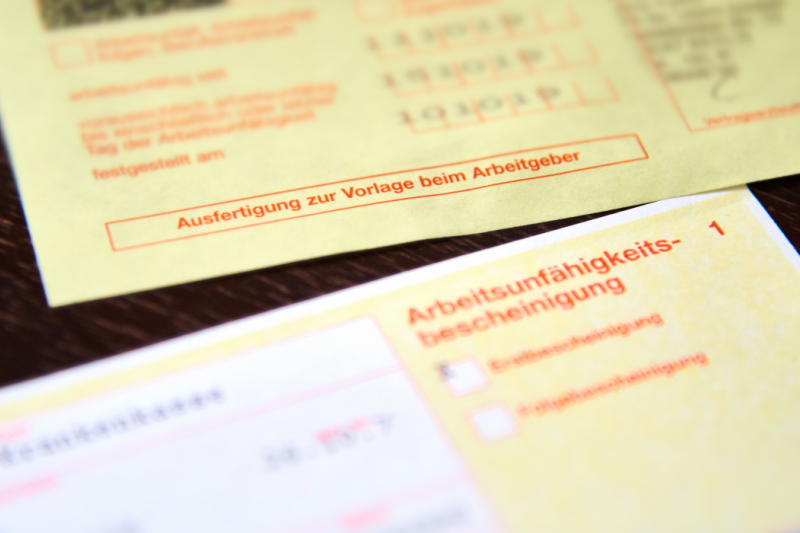
“All or Nothing” or only in part? – What the proposed concept of partial incapacity for work entails
May 2026
- Dr. Nico Querbach

Employment Law in Transition: Coalition Committee Agrees on Noteworthy Reforms
July 2026
- Ulrike Schulke
Medical Certificate from Day One: What Is Changing, What Remains the Same – and What Employers Should Do Now
July 2026
- Alke Helene Sundermann
- Johanna Kreienkamp